CEO Special
CEO Special
3 minute read
3 minute read
The Same Question Gets Three Different Answers
The Same Question Gets Three Different Answers

When you're doing discovery in B2B sales, you're taught to ask open-ended questions. Don't ask yes or no questions. Get prospects talking. Let them explain their challenges. Standard sales advice that everyone follows.
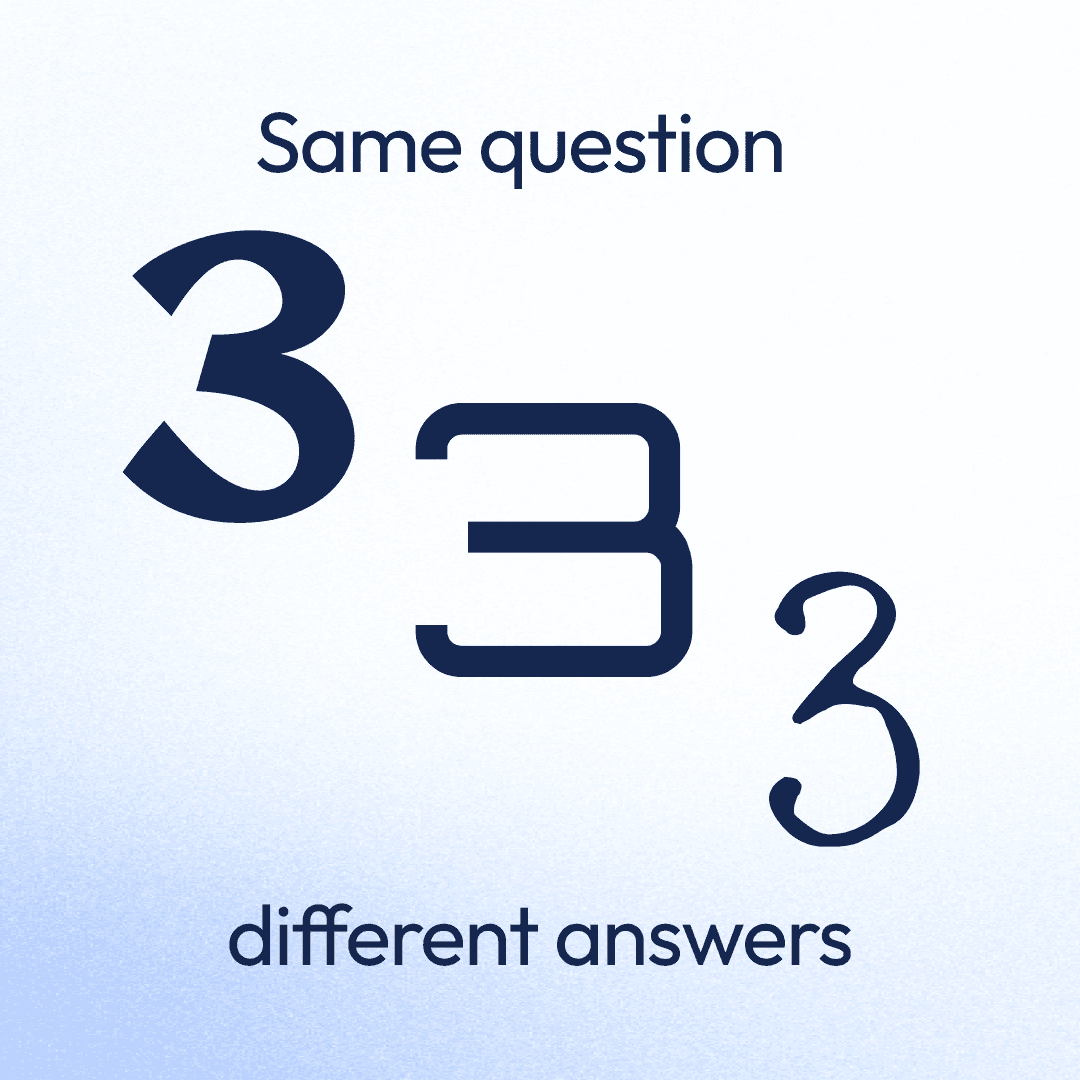
But here's what nobody mentions: the way you frame that open-ended question determines what kind of answer you actually get in your sales conversation. Ask the same topic three different ways, and you'll have three completely different discovery calls.
The Three Versions of Sales Discovery Questions
Let's say you want to understand how a prospect handles follow-ups in their sales process. Most people doing B2B sales ask something like "How are you handling follow-ups today?" It's open-ended. It should work for discovery. But what you get back is a process description. They tell you about their CRM, their cadences, their automation tools. It's information, but it's surface level in your sales conversation. You're not getting to the real problems.
Now try a different angle in your discovery call. "I assume you've already nailed the follow-up game, but are there any challenges still keeping you up at night?" Suddenly the conversation shifts. They open up about what's actually not working in their sales process. The assumption that they've got it handled makes them feel safe to admit where they don't. It's ego protection in your B2B sales conversation. You're giving them an out before they even need one.
Here's the third version for your discovery call. "How do you make sure deals don't die from inconsistent follow-up?" This isn't asking about their process. It's asking about their fear in the sales cycle. And fear gets people talking in a different way entirely during discovery. They reveal what keeps them up at night, what they're actually worried about, what failure looks like in their world.
Same topic. Three completely different sales conversations.
Why This Works in B2B Sales Discovery
At TheShowcase.ai, we've tested this across thousands of discovery conversations when booking qualified meetings with prospects in different industries. The pattern holds every single time in our lead generation work. Basic questions get you basic answers in sales calls. People give you the polished version, the official story about how their sales process works. It's not that they're lying during discovery, they're just giving you what they think you're asking for.
Assumption questions get you honest answers in B2B sales. When you frame a discovery question with the assumption that they've probably solved something, you're doing two things at once. You're making them feel competent, which drops their defensive walls in the sales conversation. And you're creating a safe space for them to admit problems without feeling judged. It's a psychological approach that works in discovery calls because people want to be seen as capable even when they're struggling.
Risk questions get you urgent answers in sales discovery. When you frame a question around preventing a negative outcome in their sales process, you're triggering loss aversion. People are more motivated to avoid losses than to pursue gains. Ask about their goals and you get aspirational answers in your B2B sales conversation. Ask about their risks and you get real answers. The ones tied to actual pain and actual urgency in their business.
The Formula in Action for Sales Conversations
Take any discovery question you normally ask in B2B sales and run it through these three frames.
The classic version sounds like "How do you handle X?" in your sales call. It's safe, it's neutral, it gets you information. But that information is usually surface level in discovery. You learn what they do in their sales process, not why they do it or what's broken.
The assumption version sounds like "You've probably already solved X, but are there still any edge cases that trip you up?" in your discovery call. You're acknowledging their competence first, which makes them feel smart during the sales conversation. Then they drop their guard and tell you what's actually not working in their process. They feel safe admitting problems during discovery because you've already validated them.
The risk version sounds like "How do you prevent Y from happening?" in your B2B sales conversation. You're not asking about their process, you're asking about their nightmare scenario. Loss aversion kicks in during discovery. They start thinking about what could go wrong in their sales operations, what has gone wrong, what they're worried might go wrong. That's where urgency lives in sales conversations.
What We've Learned About Sales Discovery
When we started paying attention to question framing at TheShowcase.ai, our discovery calls for booking qualified meetings got dramatically better. Not because we were asking about different topics in B2B sales, but because we were framing the same topics in ways that actually got prospects to open up.
A prospect who gives you a process description during discovery is giving you data. A prospect who tells you about their real challenges in their sales process is giving you a problem to solve. A prospect who reveals their fears in your B2B sales conversation is giving you urgency to work with. Those last two are what actually move deals forward.
The interesting part is that most people doing sales already know what to ask about in discovery. Everyone's doing discovery calls on the same topics. Budget, timeline, decision process, current solution, pain points in their sales operations. The questions themselves aren't the differentiator anymore in B2B sales. How you frame those questions is what separates conversations that go nowhere from conversations that turn into deals.
How to Apply This in Your Sales Process
Start with your standard discovery questions for B2B sales. The ones you ask on every call when trying to book qualified meetings. Take each one and rewrite it in all three frames. The basic version for gathering information about their sales process. The assumption version for uncovering real problems. The risk version for finding urgency.
You don't need to use all three frames on every question in your discovery call. Read the sales conversation. If someone's being guarded, try the assumption frame. If they're being vague about pain in their sales operations, try the risk frame. If you just need information about their process, the basic frame works fine.
The key is understanding that your questions shape their answers in B2B sales discovery, and their answers shape whether you get a deal or not. Stop asking better questions. Start asking the same question better in your sales conversations.
What you're really doing is controlling the psychological context of the discovery call. And in B2B sales, context is everything.
Added 24.11.2025
When you're doing discovery in B2B sales, you're taught to ask open-ended questions. Don't ask yes or no questions. Get prospects talking. Let them explain their challenges. Standard sales advice that everyone follows.
But here's what nobody mentions: the way you frame that open-ended question determines what kind of answer you actually get in your sales conversation. Ask the same topic three different ways, and you'll have three completely different discovery calls.
The Three Versions of Sales Discovery Questions
Let's say you want to understand how a prospect handles follow-ups in their sales process. Most people doing B2B sales ask something like "How are you handling follow-ups today?" It's open-ended. It should work for discovery. But what you get back is a process description. They tell you about their CRM, their cadences, their automation tools. It's information, but it's surface level in your sales conversation. You're not getting to the real problems.
Now try a different angle in your discovery call. "I assume you've already nailed the follow-up game, but are there any challenges still keeping you up at night?" Suddenly the conversation shifts. They open up about what's actually not working in their sales process. The assumption that they've got it handled makes them feel safe to admit where they don't. It's ego protection in your B2B sales conversation. You're giving them an out before they even need one.
Here's the third version for your discovery call. "How do you make sure deals don't die from inconsistent follow-up?" This isn't asking about their process. It's asking about their fear in the sales cycle. And fear gets people talking in a different way entirely during discovery. They reveal what keeps them up at night, what they're actually worried about, what failure looks like in their world.
Same topic. Three completely different sales conversations.
Why This Works in B2B Sales Discovery
At TheShowcase.ai, we've tested this across thousands of discovery conversations when booking qualified meetings with prospects in different industries. The pattern holds every single time in our lead generation work. Basic questions get you basic answers in sales calls. People give you the polished version, the official story about how their sales process works. It's not that they're lying during discovery, they're just giving you what they think you're asking for.
Assumption questions get you honest answers in B2B sales. When you frame a discovery question with the assumption that they've probably solved something, you're doing two things at once. You're making them feel competent, which drops their defensive walls in the sales conversation. And you're creating a safe space for them to admit problems without feeling judged. It's a psychological approach that works in discovery calls because people want to be seen as capable even when they're struggling.
Risk questions get you urgent answers in sales discovery. When you frame a question around preventing a negative outcome in their sales process, you're triggering loss aversion. People are more motivated to avoid losses than to pursue gains. Ask about their goals and you get aspirational answers in your B2B sales conversation. Ask about their risks and you get real answers. The ones tied to actual pain and actual urgency in their business.
The Formula in Action for Sales Conversations
Take any discovery question you normally ask in B2B sales and run it through these three frames.
The classic version sounds like "How do you handle X?" in your sales call. It's safe, it's neutral, it gets you information. But that information is usually surface level in discovery. You learn what they do in their sales process, not why they do it or what's broken.
The assumption version sounds like "You've probably already solved X, but are there still any edge cases that trip you up?" in your discovery call. You're acknowledging their competence first, which makes them feel smart during the sales conversation. Then they drop their guard and tell you what's actually not working in their process. They feel safe admitting problems during discovery because you've already validated them.
The risk version sounds like "How do you prevent Y from happening?" in your B2B sales conversation. You're not asking about their process, you're asking about their nightmare scenario. Loss aversion kicks in during discovery. They start thinking about what could go wrong in their sales operations, what has gone wrong, what they're worried might go wrong. That's where urgency lives in sales conversations.
What We've Learned About Sales Discovery
When we started paying attention to question framing at TheShowcase.ai, our discovery calls for booking qualified meetings got dramatically better. Not because we were asking about different topics in B2B sales, but because we were framing the same topics in ways that actually got prospects to open up.
A prospect who gives you a process description during discovery is giving you data. A prospect who tells you about their real challenges in their sales process is giving you a problem to solve. A prospect who reveals their fears in your B2B sales conversation is giving you urgency to work with. Those last two are what actually move deals forward.
The interesting part is that most people doing sales already know what to ask about in discovery. Everyone's doing discovery calls on the same topics. Budget, timeline, decision process, current solution, pain points in their sales operations. The questions themselves aren't the differentiator anymore in B2B sales. How you frame those questions is what separates conversations that go nowhere from conversations that turn into deals.
How to Apply This in Your Sales Process
Start with your standard discovery questions for B2B sales. The ones you ask on every call when trying to book qualified meetings. Take each one and rewrite it in all three frames. The basic version for gathering information about their sales process. The assumption version for uncovering real problems. The risk version for finding urgency.
You don't need to use all three frames on every question in your discovery call. Read the sales conversation. If someone's being guarded, try the assumption frame. If they're being vague about pain in their sales operations, try the risk frame. If you just need information about their process, the basic frame works fine.
The key is understanding that your questions shape their answers in B2B sales discovery, and their answers shape whether you get a deal or not. Stop asking better questions. Start asking the same question better in your sales conversations.
What you're really doing is controlling the psychological context of the discovery call. And in B2B sales, context is everything.
Added 24.11.2025
Unlock your full potential with revolutionary B2B outreach.


B2B AI-driven lead generation SaaS Founded in 2023

Made with ❤️ in Gothenburg, Sweden.
© TheShowcase.ai 2025.
B2B AI-driven lead generation SaaS
Founded in 2023
Made with ❤️ in Gothenburg, Sweden.
© TheShowcase.ai 2025.
Unlock your full potential with revolutionary B2B outreach.
B2B AI-driven lead generation SaaS
Founded in 2023
Made with ❤️ in Gothenburg, Sweden.
© TheShowcase.ai 2025.
Unlock your full potential with revolutionary B2B outreach.
B2B AI-driven lead generation SaaS
Founded in 2023
Made with ❤️ in Gothenburg, Sweden.
© TheShowcase.ai 2025.
Unlock your full potential with revolutionary B2B outreach.