CEO Special
CEO Special
2 minute read
2 minute read
Adding More Resources Made Our Problem Worse
Adding More Resources Made Our Problem Worse
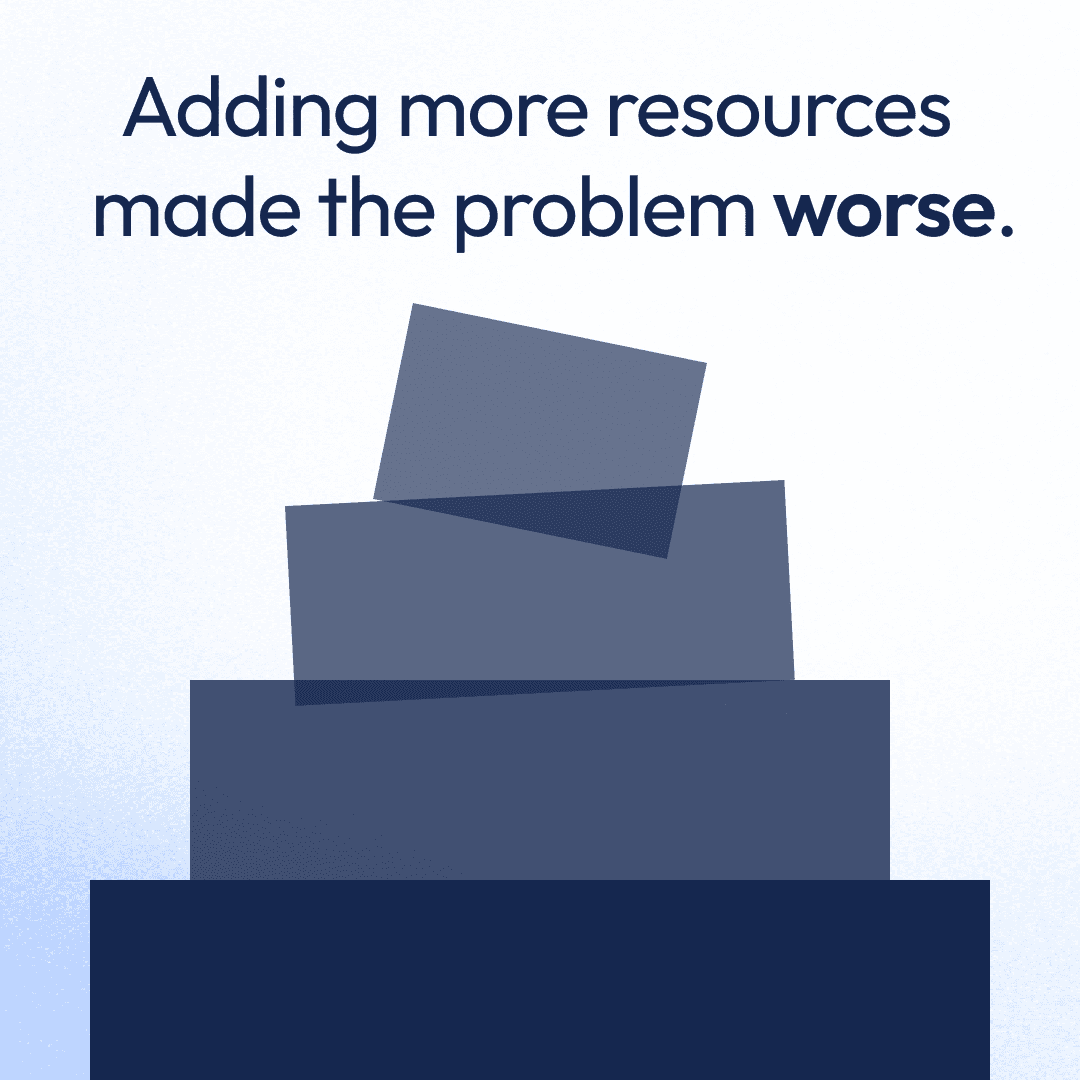

When your lead generation operations hit a bottleneck, the solution seems obvious: add more resources. That's what we did at TheShowcase.ai when we were scaling our AI-powered outreach. It seemed like the right move at the time.
The Situation We Faced
Our lead generation operations were growing. We were booking qualified meetings for clients across different industries, and demand kept increasing. Prospects were waiting longer than we wanted, our team was juggling multiple client campaigns, and we needed to maintain quality standards while handling the volume.
The natural response was to invest in infrastructure. New project management software to handle the complexity. Automation tools to speed up our sales outreach. More sophisticated workflows to manage different client requirements. Extra tracking systems to maintain visibility across everything.
These weren't random purchases. Each tool solved a specific problem on paper. But within weeks, we noticed something unexpected. Our team was spending more time managing the tools than using them effectively for client work. Handoffs between systems were creating delays we hadn't anticipated. Simple tasks that used to take one platform now required jumping between multiple systems. We'd added layers of complexity without getting the efficiency gains we expected.
The Real Issue with Scaling Broken Processes
Here's what we discovered about scaling lead generation operations: when your process has inefficiencies, adding more resources just multiplies those inefficiencies at a larger scale. That small leak becomes a flood. We were trying to book more qualified meetings faster without first making sure our process was actually optimized.
What We Changed in Our Operations
We shifted our approach to scaling completely. Instead of asking "What can we add?" we started asking "What can we remove?"
We eliminated first. Several tools that seemed essential for managing our B2B outreach were actually creating duplicate work across our workflow. Removing them didn't hurt our ability to book meetings for clients. The team actually felt relief having fewer systems to juggle between campaigns.
We automated smarter. Instead of buying complex automation platforms for our sales process, we identified the most repetitive tasks and automated them. We streamlined our actual workflow. We mapped how work really moved through our team when booking qualified meetings, not how we thought it should move, and discovered multiple approval steps that added time without adding value to client campaigns. Removing them significantly reduced our cycle time. Tasks that used to take days now took hours.
Our New Approach to Scaling Lead Generation
Before adding any new resources now, we follow a clear protocol. We document what actually happens in our B2B sales processes, watching the work in real time rather than trusting our assumptions. Then we find the real constraint in our lead generation operations, which is almost never what we initially suspect. We optimize what already exists, pushing our current setup to see what it can really handle for booking meetings. We measure the improvement to confirm we've actually solved the problem. Only after all of this, if we've genuinely maxed out our efficiency, do we consider adding new resources.
Real Examples from Our Lead Generation Work
When our CRM data syncing was creating delays in our outreach workflows, we built a simple webhook that does exactly what we need. No expensive integration platform required, and our team could continue booking qualified meetings without interruption.
When quality issues started appearing in our client communications, we created a checklist that catches most problems before they even reach our quality review stage. The issues stopped without adding anyone to the team, and our clients continued getting the same quality of outreach.
When task ownership became unclear across different client campaigns, clear guidelines replaced what could have been an expensive workflow routing software implementation. Everyone knew exactly who owned what in each lead generation campaign, and work stopped falling through the cracks.
Each change made our B2B sales operations faster and more efficient without adding cost or complexity. The solutions were often simpler than we expected once we stopped looking for things to buy and started looking for things to fix in our process.
The Lesson for B2B Lead Generation Teams
Most growth problems in sales and lead generation aren't actually resource problems. They're efficiency problems that look like capacity constraints. When you dig deeper, you find processes that could be streamlined, unclear ownership creating confusion in your sales workflow, or small inefficiencies that have been accepted as normal.
At TheShowcase.ai, we learned that sustainable growth in booking qualified meetings comes from optimizing what you have before adding more. Fix the leak before adding water. Perfect the sales process before adding power. Optimize your lead generation operations before you scale.
Otherwise, you're not solving problems in your B2B outreach. You're just making them more expensive.
Added 24.11.2025
When your lead generation operations hit a bottleneck, the solution seems obvious: add more resources. That's what we did at TheShowcase.ai when we were scaling our AI-powered outreach. It seemed like the right move at the time.
The Situation We Faced
Our lead generation operations were growing. We were booking qualified meetings for clients across different industries, and demand kept increasing. Prospects were waiting longer than we wanted, our team was juggling multiple client campaigns, and we needed to maintain quality standards while handling the volume.
The natural response was to invest in infrastructure. New project management software to handle the complexity. Automation tools to speed up our sales outreach. More sophisticated workflows to manage different client requirements. Extra tracking systems to maintain visibility across everything.
These weren't random purchases. Each tool solved a specific problem on paper. But within weeks, we noticed something unexpected. Our team was spending more time managing the tools than using them effectively for client work. Handoffs between systems were creating delays we hadn't anticipated. Simple tasks that used to take one platform now required jumping between multiple systems. We'd added layers of complexity without getting the efficiency gains we expected.
The Real Issue with Scaling Broken Processes
Here's what we discovered about scaling lead generation operations: when your process has inefficiencies, adding more resources just multiplies those inefficiencies at a larger scale. That small leak becomes a flood. We were trying to book more qualified meetings faster without first making sure our process was actually optimized.
What We Changed in Our Operations
We shifted our approach to scaling completely. Instead of asking "What can we add?" we started asking "What can we remove?"
We eliminated first. Several tools that seemed essential for managing our B2B outreach were actually creating duplicate work across our workflow. Removing them didn't hurt our ability to book meetings for clients. The team actually felt relief having fewer systems to juggle between campaigns.
We automated smarter. Instead of buying complex automation platforms for our sales process, we identified the most repetitive tasks and automated them. We streamlined our actual workflow. We mapped how work really moved through our team when booking qualified meetings, not how we thought it should move, and discovered multiple approval steps that added time without adding value to client campaigns. Removing them significantly reduced our cycle time. Tasks that used to take days now took hours.
Our New Approach to Scaling Lead Generation
Before adding any new resources now, we follow a clear protocol. We document what actually happens in our B2B sales processes, watching the work in real time rather than trusting our assumptions. Then we find the real constraint in our lead generation operations, which is almost never what we initially suspect. We optimize what already exists, pushing our current setup to see what it can really handle for booking meetings. We measure the improvement to confirm we've actually solved the problem. Only after all of this, if we've genuinely maxed out our efficiency, do we consider adding new resources.
Real Examples from Our Lead Generation Work
When our CRM data syncing was creating delays in our outreach workflows, we built a simple webhook that does exactly what we need. No expensive integration platform required, and our team could continue booking qualified meetings without interruption.
When quality issues started appearing in our client communications, we created a checklist that catches most problems before they even reach our quality review stage. The issues stopped without adding anyone to the team, and our clients continued getting the same quality of outreach.
When task ownership became unclear across different client campaigns, clear guidelines replaced what could have been an expensive workflow routing software implementation. Everyone knew exactly who owned what in each lead generation campaign, and work stopped falling through the cracks.
Each change made our B2B sales operations faster and more efficient without adding cost or complexity. The solutions were often simpler than we expected once we stopped looking for things to buy and started looking for things to fix in our process.
The Lesson for B2B Lead Generation Teams
Most growth problems in sales and lead generation aren't actually resource problems. They're efficiency problems that look like capacity constraints. When you dig deeper, you find processes that could be streamlined, unclear ownership creating confusion in your sales workflow, or small inefficiencies that have been accepted as normal.
At TheShowcase.ai, we learned that sustainable growth in booking qualified meetings comes from optimizing what you have before adding more. Fix the leak before adding water. Perfect the sales process before adding power. Optimize your lead generation operations before you scale.
Otherwise, you're not solving problems in your B2B outreach. You're just making them more expensive.
Added 24.11.2025
Unlock your full potential with revolutionary B2B outreach.


B2B AI-driven lead generation SaaS Founded in 2023

Made with ❤️ in Gothenburg, Sweden.
© TheShowcase.ai 2025.
B2B AI-driven lead generation SaaS
Founded in 2023
Made with ❤️ in Gothenburg, Sweden.
© TheShowcase.ai 2025.
Unlock your full potential with revolutionary B2B outreach.
B2B AI-driven lead generation SaaS
Founded in 2023
Made with ❤️ in Gothenburg, Sweden.
© TheShowcase.ai 2025.
Unlock your full potential with revolutionary B2B outreach.
B2B AI-driven lead generation SaaS
Founded in 2023
Made with ❤️ in Gothenburg, Sweden.
© TheShowcase.ai 2025.
Unlock your full potential with revolutionary B2B outreach.