New
New
New
CEO Special
CEO Special
CEO Special
3 minute read
3 minute read
3 minute read
If You're Not Failing, You're Not Learning:
Why Failure Is the Path to Success
If You're Not Failing, You're Not Learning:
Why Failure Is the Path to Success
If You're Not Failing, You're Not Learning:
Why Failure Is the Path to Success
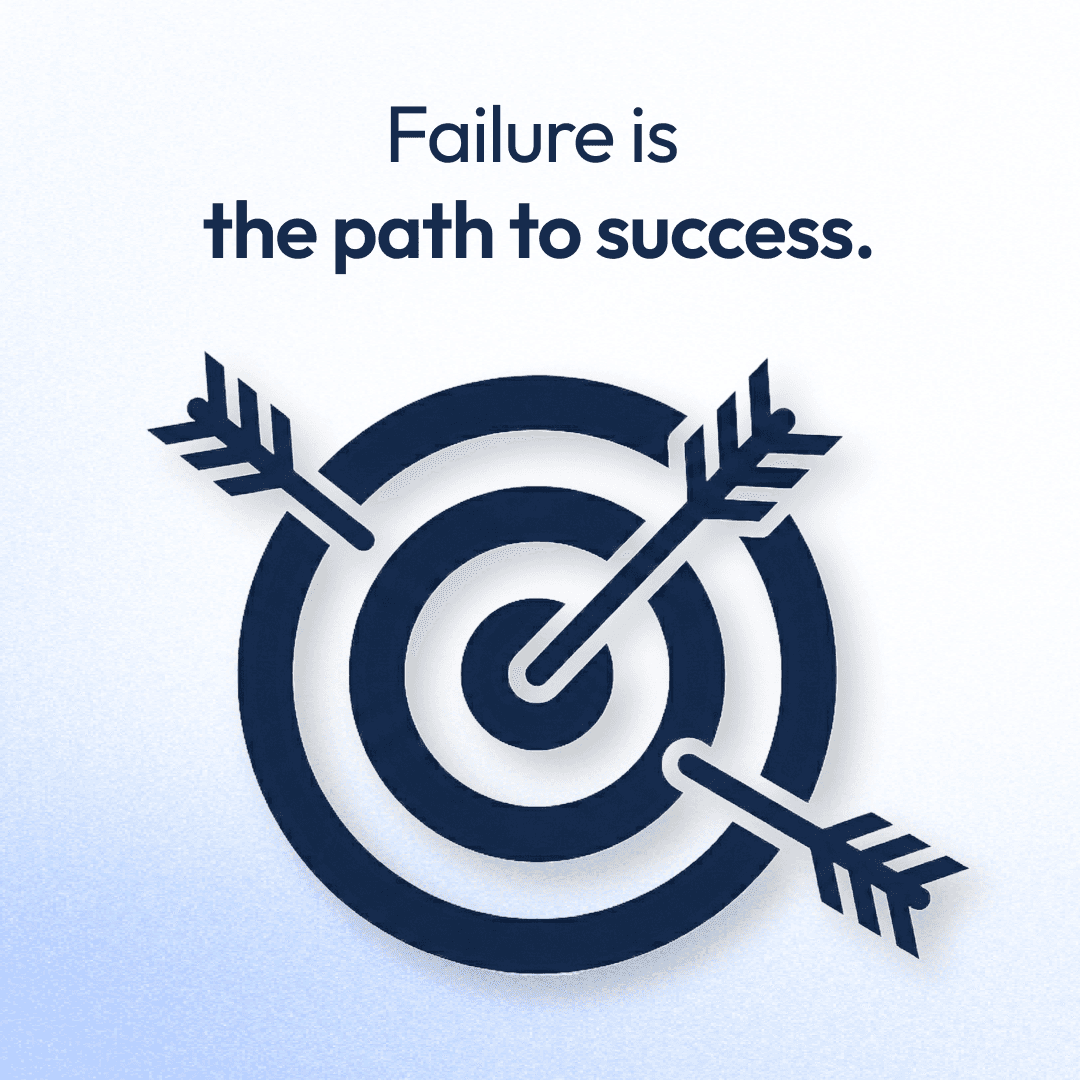

If you're not failing, you're not learning. You're not growing. You're stuck.
Most people avoid failure. They play it safe. They stick to what already works. They don't try new approaches because they might not work.
Then they wonder why they're stuck at the same level. Why their business isn't improving. Why competitors are moving past them. Why their results have plateaued.
The Mindset Shift About Failure
Here's what changes everything: failure isn't the opposite of success. It's the path to it.
Without failing, you don't know what doesn't work. You don't know what approaches fall flat. You don't know what strategies to avoid. You don't know which parts of your process need fixing.
You're operating on assumptions instead of knowledge. You're guessing about what works instead of knowing. You're stuck doing the same things because you haven't tested enough alternatives to find better approaches.
Every failure teaches you something valuable. Every flop shows you what not to do. Every mistake reveals a better path forward.
When Failure Becomes Data
When you expect failure, it stops being scary. It becomes data for improving your process.
This approach didn't work? Now you know that strategy doesn't resonate with your audience. That's not a personal failure. That's information you can use to try something better next time.
This project flopped? Now you can adjust your strategy based on what you learned about what doesn't work. That's not wasted effort. That's eliminated one path that won't get you there so you can focus on paths that might.
This process broke? Now you can fix it and make it stronger. That's not a setback. That's discovering where your systems are weak before they break at scale.
The goal isn't to avoid failing. The goal is to fail faster so you learn faster.
Why Failing Faster Wins
Try to fail quickly in your experiments. Don't spend months perfecting an approach before testing it. Launch imperfect versions fast, see what breaks, learn from it, and iterate.
Every failure you collect is one less thing standing between you and what actually works. Every approach that doesn't work is one you can eliminate from consideration. Every mistake is information that makes your next attempt better.
The people winning aren't the ones who never fail. They're the ones who failed more than you've even tried. They've tested more approaches. They've learned from more mistakes. They've accumulated more knowledge about what doesn't work so they can focus on what does.
Think about it: if you've tried ten approaches and nine failed, you're closer to success than someone who's tried three approaches and all three failed. You've eliminated more wrong paths. You have more data about what doesn't work. You're more likely to find what actually works because you've tested more possibilities.
The Loop That Creates Success
Fail. Learn from it. Succeed based on what you learned. Then find the next failure to learn from. That's the loop that creates continuous improvement.
Always run experiments. Always test new ideas. Always try approaches that might not work. Because that's how you find the breakthroughs.
Most experiments fail. Most new approaches don't beat your current best. Most tests don't produce the results you hope for. But the ones that do succeed create meaningful improvements in your performance. And you only find those successes by being willing to fail repeatedly.
The companies that are stuck are the ones that stopped failing. They found something that works and they're protecting it. They're not testing new approaches because they might fail. They're not experimenting because experiments might not work.
So they don't learn anything new. They don't discover better approaches. They don't improve their results. They just keep doing the same thing, getting the same results, while competitors who are willing to fail pass them by.
What Stops People From Failing
The fear of failure is really fear of what failure means about you. If you try something new and it fails, does that mean you're not good at what you do? Does it mean you made a mistake? Does it mean you wasted time and resources?
No. It means you tested something that didn't work. That's all. It doesn't say anything about your abilities or your judgment or your value as a professional. It just says this specific approach didn't work this time in this context.
Separate your identity from your experiments. When something fails, don't think "I'm bad at this." Think "that approach didn't work." The failure is about the method, not about you or your expertise.
That separation makes it easier to fail. You're not protecting your ego when you test new approaches. You're just gathering data about what works and what doesn't.
How to Fail Better
Not all failures are equally valuable. Some teach you a lot. Some teach you almost nothing. The goal is to fail in ways that generate useful learning.
Fail fast. Don't spend months developing something before you test it. Launch quick versions, see what breaks, learn from it, iterate. The faster you fail, the faster you learn.
Fail small. Don't bet everything on one untested approach. Run small experiments. Test at a scale where failure won't cripple your business but success can still teach you something valuable.
Fail deliberately. Don't just mess things up randomly. Choose specific things to test. Have a hypothesis about what might work better. Then test it and see if you're right. Deliberate failures teach you more than accidental ones.
Fail and learn. Don't just fail and move on to the next thing. Actually extract the lesson from each failure. What didn't work? Why didn't it work? What does that tell you about your situation? What will you do differently next time? The learning is where the value comes from.
The Real Competition
Don't worry about competitors who seem perfect. The companies that show no signs of struggle. The businesses that appear to have everything figured out. The operations that look flawless from the outside.
Because they're either not trying hard enough to improve, or they're hiding their failures. Either way, they're not learning as fast as they could be.
Worry about competitors who are obviously experimenting. Who are trying new things. Who are willing to look imperfect while they test approaches. Because those are the companies that are learning faster than everyone else. Those are the ones that will find breakthroughs while everyone else is protecting what already works.
The real competition isn't between companies that never fail. It's between companies that fail and learn faster than others versus companies that fail and learn slower.
The Challenge About Failure
What's a recent failure that taught you something valuable?
Think about something that didn't work. A project that flopped. A process that broke. A strategy that didn't deliver results. An approach that got ignored.
What did you learn from it? What does it tell you about your situation? About your approach? About your operations? About what to try differently next time?
If you can't think of a recent failure, that's your real problem. It means you're not trying enough new things. You're not testing enough approaches. You're playing it too safe. You're stuck because you're avoiding the failures that would teach you how to get unstuck.
Celebrate intelligent failures. The experiments that didn't work but taught you something valuable. The tests that failed but revealed insights you can use going forward. The attempts that fell short but eliminated an approach so you can focus on better options.
Because that's how you actually get better. Not by avoiding failure. By failing faster, learning from it, and using those lessons to improve.
If you're not failing, you're not learning. If you're not learning, you're not improving. If you're not improving, you're falling behind competitors who are.
Fail. Learn from it. Succeed based on what you learned. Then find the next failure to learn from. That's the loop that creates continuous growth.
That's how you actually get better and build something successful that keeps improving over time.
If you're not failing, you're not learning. You're not growing. You're stuck.
Most people avoid failure. They play it safe. They stick to what already works. They don't try new approaches because they might not work.
Then they wonder why they're stuck at the same level. Why their business isn't improving. Why competitors are moving past them. Why their results have plateaued.
The Mindset Shift About Failure
Here's what changes everything: failure isn't the opposite of success. It's the path to it.
Without failing, you don't know what doesn't work. You don't know what approaches fall flat. You don't know what strategies to avoid. You don't know which parts of your process need fixing.
You're operating on assumptions instead of knowledge. You're guessing about what works instead of knowing. You're stuck doing the same things because you haven't tested enough alternatives to find better approaches.
Every failure teaches you something valuable. Every flop shows you what not to do. Every mistake reveals a better path forward.
When Failure Becomes Data
When you expect failure, it stops being scary. It becomes data for improving your process.
This approach didn't work? Now you know that strategy doesn't resonate with your audience. That's not a personal failure. That's information you can use to try something better next time.
This project flopped? Now you can adjust your strategy based on what you learned about what doesn't work. That's not wasted effort. That's eliminated one path that won't get you there so you can focus on paths that might.
This process broke? Now you can fix it and make it stronger. That's not a setback. That's discovering where your systems are weak before they break at scale.
The goal isn't to avoid failing. The goal is to fail faster so you learn faster.
Why Failing Faster Wins
Try to fail quickly in your experiments. Don't spend months perfecting an approach before testing it. Launch imperfect versions fast, see what breaks, learn from it, and iterate.
Every failure you collect is one less thing standing between you and what actually works. Every approach that doesn't work is one you can eliminate from consideration. Every mistake is information that makes your next attempt better.
The people winning aren't the ones who never fail. They're the ones who failed more than you've even tried. They've tested more approaches. They've learned from more mistakes. They've accumulated more knowledge about what doesn't work so they can focus on what does.
Think about it: if you've tried ten approaches and nine failed, you're closer to success than someone who's tried three approaches and all three failed. You've eliminated more wrong paths. You have more data about what doesn't work. You're more likely to find what actually works because you've tested more possibilities.
The Loop That Creates Success
Fail. Learn from it. Succeed based on what you learned. Then find the next failure to learn from. That's the loop that creates continuous improvement.
Always run experiments. Always test new ideas. Always try approaches that might not work. Because that's how you find the breakthroughs.
Most experiments fail. Most new approaches don't beat your current best. Most tests don't produce the results you hope for. But the ones that do succeed create meaningful improvements in your performance. And you only find those successes by being willing to fail repeatedly.
The companies that are stuck are the ones that stopped failing. They found something that works and they're protecting it. They're not testing new approaches because they might fail. They're not experimenting because experiments might not work.
So they don't learn anything new. They don't discover better approaches. They don't improve their results. They just keep doing the same thing, getting the same results, while competitors who are willing to fail pass them by.
What Stops People From Failing
The fear of failure is really fear of what failure means about you. If you try something new and it fails, does that mean you're not good at what you do? Does it mean you made a mistake? Does it mean you wasted time and resources?
No. It means you tested something that didn't work. That's all. It doesn't say anything about your abilities or your judgment or your value as a professional. It just says this specific approach didn't work this time in this context.
Separate your identity from your experiments. When something fails, don't think "I'm bad at this." Think "that approach didn't work." The failure is about the method, not about you or your expertise.
That separation makes it easier to fail. You're not protecting your ego when you test new approaches. You're just gathering data about what works and what doesn't.
How to Fail Better
Not all failures are equally valuable. Some teach you a lot. Some teach you almost nothing. The goal is to fail in ways that generate useful learning.
Fail fast. Don't spend months developing something before you test it. Launch quick versions, see what breaks, learn from it, iterate. The faster you fail, the faster you learn.
Fail small. Don't bet everything on one untested approach. Run small experiments. Test at a scale where failure won't cripple your business but success can still teach you something valuable.
Fail deliberately. Don't just mess things up randomly. Choose specific things to test. Have a hypothesis about what might work better. Then test it and see if you're right. Deliberate failures teach you more than accidental ones.
Fail and learn. Don't just fail and move on to the next thing. Actually extract the lesson from each failure. What didn't work? Why didn't it work? What does that tell you about your situation? What will you do differently next time? The learning is where the value comes from.
The Real Competition
Don't worry about competitors who seem perfect. The companies that show no signs of struggle. The businesses that appear to have everything figured out. The operations that look flawless from the outside.
Because they're either not trying hard enough to improve, or they're hiding their failures. Either way, they're not learning as fast as they could be.
Worry about competitors who are obviously experimenting. Who are trying new things. Who are willing to look imperfect while they test approaches. Because those are the companies that are learning faster than everyone else. Those are the ones that will find breakthroughs while everyone else is protecting what already works.
The real competition isn't between companies that never fail. It's between companies that fail and learn faster than others versus companies that fail and learn slower.
The Challenge About Failure
What's a recent failure that taught you something valuable?
Think about something that didn't work. A project that flopped. A process that broke. A strategy that didn't deliver results. An approach that got ignored.
What did you learn from it? What does it tell you about your situation? About your approach? About your operations? About what to try differently next time?
If you can't think of a recent failure, that's your real problem. It means you're not trying enough new things. You're not testing enough approaches. You're playing it too safe. You're stuck because you're avoiding the failures that would teach you how to get unstuck.
Celebrate intelligent failures. The experiments that didn't work but taught you something valuable. The tests that failed but revealed insights you can use going forward. The attempts that fell short but eliminated an approach so you can focus on better options.
Because that's how you actually get better. Not by avoiding failure. By failing faster, learning from it, and using those lessons to improve.
If you're not failing, you're not learning. If you're not learning, you're not improving. If you're not improving, you're falling behind competitors who are.
Fail. Learn from it. Succeed based on what you learned. Then find the next failure to learn from. That's the loop that creates continuous growth.
That's how you actually get better and build something successful that keeps improving over time.
Unlock your full potential with revolutionary B2B outreach.



B2B AI-driven lead generation SaaS Founded in 2023

Made with ❤️ in Gothenburg, Sweden.
© TheShowcase.ai 2026.
B2B AI-driven lead generation SaaS
Founded in 2023
Made with ❤️ in Gothenburg, Sweden.
© TheShowcase.ai 2026.
Unlock your full potential with revolutionary B2B outreach.
B2B AI-driven lead generation SaaS
Founded in 2023
Made with ❤️ in Gothenburg, Sweden.
© TheShowcase.ai 2026.
Unlock your full potential with revolutionary B2B outreach.
B2B AI-driven lead generation SaaS
Founded in 2023
Made with ❤️ in Gothenburg, Sweden.
© TheShowcase.ai 2026.
Unlock your full potential with revolutionary B2B outreach.